
ADA Signs Your Business Needs

Ada Signs Your Business Needs

Table of Contents

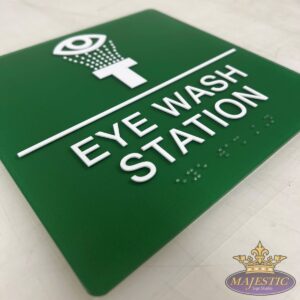
Buildings and organizations are required to install ADA compliant signage as part of the Americans With Disabilities Act, established in 1990. In order to meet the ADA requirements, braille signs, and signs using graphics or larger fonts are used to effectively communicate with visitors who may be legally blind or visually impaired. For example, ADA restroom signs, signs that relate to safety, and wayfinding signs go a long way in making it easier for everyone to navigate your facility.

As mentioned, braille signs are used as part of ADA signage, but there’s actually much more to ADA compliance than simply raised characters. If you’re a new business or a business in need of updating your ADA signs in California or nationwide, know that there are many different elements to consider in order to be compliant.

  1. Location.
    Specifically, signs identifying rooms must be located adjacent to the latch side of the door.
  2. Height.
    Overhead signs must be at least 80 inches above the ground. Wall mounted signs should be 27 inches from the floor, but should not exceed 80 inches.
  3. Color.
    Background and characters should be created in contrast.
  4. Finish.
    Signs should have a non-glare finish.
  5. Raised characters.
    Braille signs must be created using uppercase letters. Letters should range from 5/8 inch to two inches in height and raise by 1/32 of an inch from the background.
  6. Pictograms.
    Pictorial representations of the accessibility symbol should be shown in standard style.

Types Of ADA Signs That May Be Required

When you’re planning for your ADA signage, know that there are several types of signs outlined by ADA laws. Although there are requirements and guidelines to follow, custom ADA signs can still be brand specific and include your logo and brand colors.

ADA sign types include:

  • Identification signs.
    These signs help to identify a particular space or a room, such as ADA restroom signs.
  • Informational signs.
    Ensure you have the necessary signs to provide details about space or area, such as how to pay for parking or where to drop off forms.
  • Directional signs.
    Wayfinding signs help direct visitors to reception areas, meeting rooms and different spaces in your facility.
  • Overhead signs.
    These are signs mounted on overhead support, such as wall signs and ceiling signs.
    Safety signs. ADA signs are required to identify exits and stairwells, as well as potential hazards.

Get The Right ADA Signs For Your Business From Majestic Sign Studio

No matter what type of business you’re in, you need to ensure that you’re meeting the requirements for ADA signage. Creating custom ADA signs will create a positive experience for all visitors and employees, which will support your business success and your reputation. If you need ADA Signs in California or nationwide, contact Majestic Sign Studio. We have extensive experience in creating branded and compliant ADA signs, and our team will make sure you have what you need to support your success. Call Majestic Sign Studio to arrange an ADA signage consultation and get the right signs for your needs.



Picture of Gordy Wolfe

Gordy Wolfe

President & Owner of Majestic Sign Studio, is a visionary leader based in Corona, California, driving innovation in the signage industry. With a deep passion for transforming brand ideas into tangible, high-impact visual solutions, Gordy has steered Majestic Sign Studio to a reputation for excellence—offering custom indoor and outdoor signs, ADA signage, wall murals, vehicle wraps, and more.

Leading the company since 2012, Gordy brings over 30 years of industry experience—including nearly 21 years as a National Account Manager at AkzoNobel (Glidden Professional) — AkzoNobel is a Fortune 500 global company. His leadership blends deep expertise, creative vision, and hands-on involvement to deliver innovative, high-quality signage solutions. Under his guidance, Majestic Sign Studio combines creative design, precise fabrication, and expert installation to help businesses across the United States achieve standout branding. Every project reflects both aesthetic appeal and strategic purpose—making signage not just seen, but remembered.

Tell Us About Your Sign Project
What type of signage are you looking for?
Allowed file size up to 50MB: jpg, pdf, eps, ai, png

Recent Posts

Commercial Sign Company Guide | Majestic Sign Studio

What Makes a Great Commercial Sign Company in Southern California?

A great commercial sign company does more than produce signs—it manages the entire process from design and permitting to fabrication and installation. Choosing the right partner ensures your signage is code-compliant, visually impactful, and built to last. This guide explains what to look for when selecting a commercial signage company for your business or property.

Read More
Tell Us About Your Sign Project
What type of signage are you looking for?
Allowed file size up to 50MB: jpg, pdf, eps, ai, png

Recent Posts

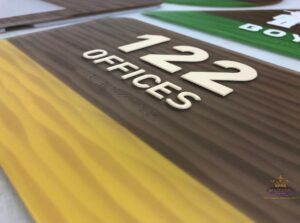
Room 122 offices sign with raised numbers, tactile lettering, and braille

ADA Signage Requirements for Commercial Buildings in California

For ADA signage in commercial buildings in California, one must comply with both the Americans with Disabilities Act (ADA) and the California Building Codes (CBC). For facility managers and business owners, the specific requirements for tactile signs, braille, and placement are not optional. Non-compliance leads to failed inspections, accessibility lawsuits, and costly retrofits. The rules apply to any permanent room or space: restrooms, stairwells, exits, conference rooms, and accessible parking.

Read More
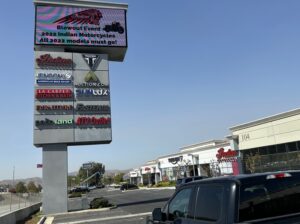
Multi-tenant pylon sign with tenant panels and digital message display at a Southern California retail property

Essential Sign Types Every Multi-Tenant Building Needs in Southern California

Managing a multi-tenant building in Southern California comes with a daily reality: people get lost. Delivery drivers circle parking lots. Clients walk into the wrong suites. Tenants get frustrated calls from visitors who can’t find the elevator bank.

That confusion isn’t just annoying; it costs you time, tenant satisfaction, and ultimately, lease renewals.

Your multi-tenant building signage in Southern California is either solving those problems or making them worse. When signage is unclear, outdated, or incomplete, you pay for it with disrupted operations and tenant turnover.

Read More