
A signage budget for a commercial property in California is not just about assigning numbers to a project. It directly shapes how a property is experienced.
In Southern California, where commercial districts across places like Irvine business corridors, Anaheim mixed-use developments, and Santa Ana office clusters compete for attention, signage plays a quiet but constant role in property perception.
We’ve seen how unclear budgeting leads to inconsistent signage systems, delayed tenant updates, and missed branding opportunities. A structured signage budget supports long-term planning, reduces emergency replacements, and helps maintain a cohesive visual identity across the property.
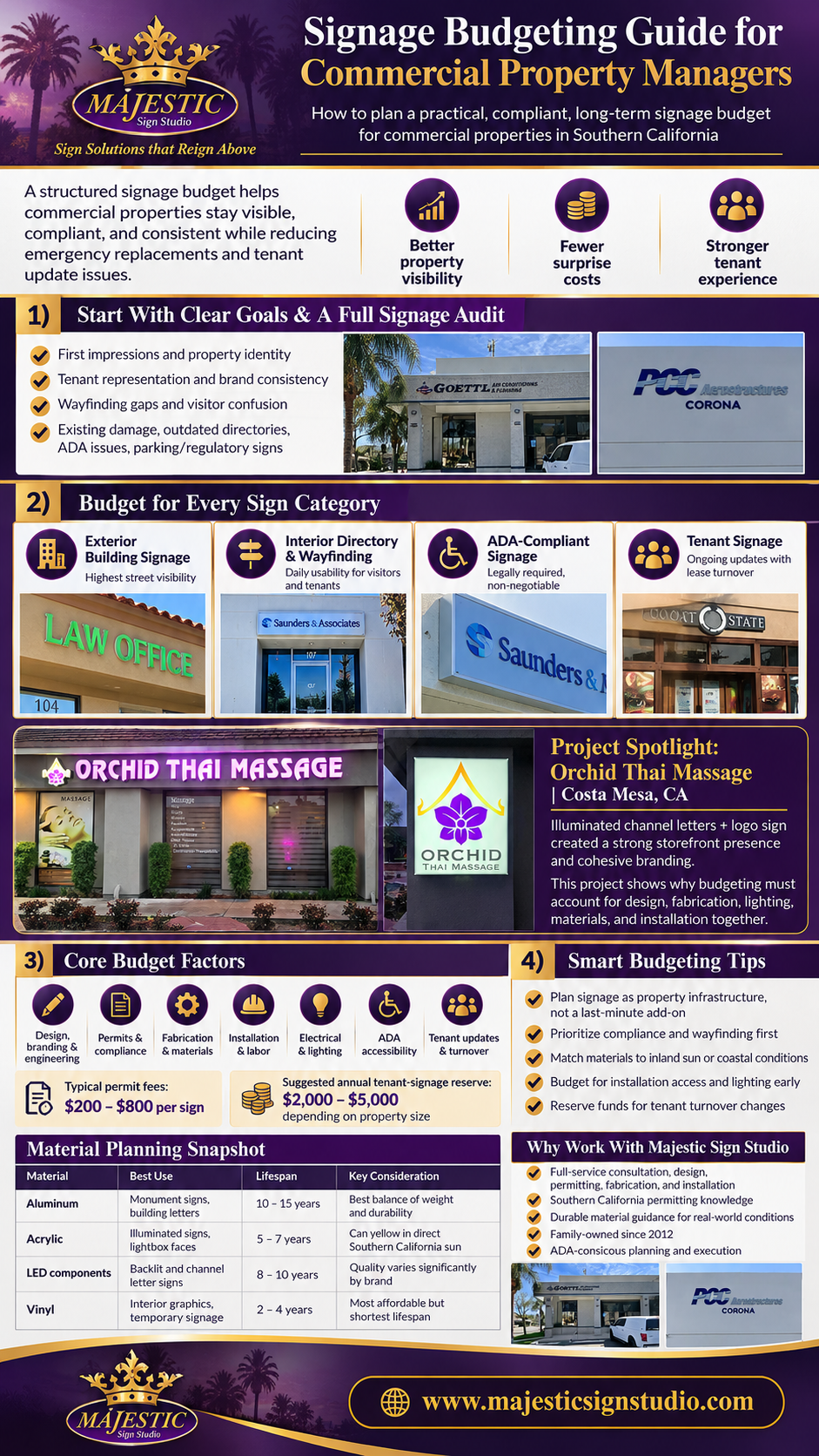
Here’s a quick visual breakdown of the key areas commercial property managers should account for when building a practical, long-term signage budget.
Start With Clear Signage Goals and Scope
Before you build a signage planning budget, you need to define what your signage system should achieve. Without clear goals, it’s easy to overspend on elements that don’t improve how your property functions.
Start by asking yourself the following questions to guide your planning:
- What should visitors understand immediately upon arrival? First impressions set expectations for the entire property.
- How should your tenants be represented visually? Consistent tenant signage reinforces professionalism.
- Where do people currently get lost or confused? Wayfinding gaps create frustration and lost foot traffic.
Once you answer these, your budget becomes more intentional. You’ll spend based on purpose, not guesswork.
Conduct a Full Property Signage Audit Process
You can’t estimate the cost of commercial signage accurately without knowing what you already have in place. A walkthrough helps you spot inconsistencies, damage, and missed opportunities across your property.
As you assess your site, make sure you document the following areas:
- Exterior signage conditions – Look for fading, cracking, or loose mounting
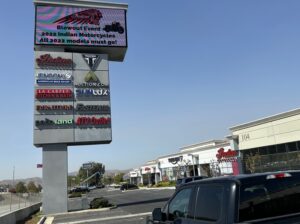
- Directory systems – Check for outdated tenant names and readability
- Wayfinding signs – Note missing or confusing directional markers
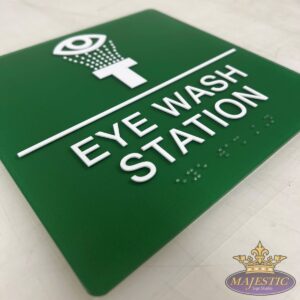
- ADA signage – Verify Braille, tactile letters, and proper mounting height
- Parking and regulatory signs – Ensure visibility and compliance with local codes
This gives you a clear baseline. From there, you can prioritize updates instead of replacing everything at once.
Understand Different Types of Commercial Property Signage
Each type of signage serves a specific purpose, and you’ll need to plan for all of them in your signage investment planning. Knowing how these categories function helps you allocate your budget more effectively.
Here are the main signage types you’ll typically include:
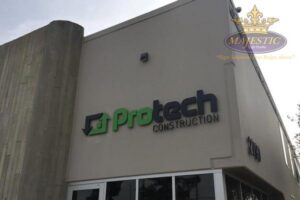
- Exterior Building Signage – Your property’s face to the street. Highest visibility and highest cost per square foot.
- Interior Directory and Wayfinding Systems – Used daily by tenants and visitors. Don’t cut corners here.
- ADA-Compliant Signage – Legally required for restrooms, elevators, and permanent rooms. Non-negotiable.
- Tenant Signage – Changes with every lease turnover. Plan for ongoing updates.
Breaking signage into categories helps you see where your budget is going. It also prevents gaps that could affect usability or compliance.
Orchid Thai Massage Signage Project in Costa Mesa, California
Majestic Sign Studio completed signage for Orchid Thai Massage in Costa Mesa, California, featuring illuminated channel letters and a custom logo sign that created a strong storefront presence and consistent branding. The project reflects how signage budgeting goes beyond the sign itself, covering design, fabrication, lighting, materials, and installation to create a polished result that supports both visibility and brand identity.
For commercial property managers and business owners, this kind of project shows why a clear signage budget matters from the start. When multiple sign elements need to work together, proper planning helps balance appearance, function, and long-term value while avoiding gaps that can lead to inconsistent branding or added costs later on.
Plan for Design, Branding, and Engineering Costs
Design is where your signage system starts to take shape visually. If you skip proper planning here, you may end up reworking designs later, which affects your overall budget.
As you build your plan, consider these key design and engineering factors:
- Layout and visual consistency – Fonts, colors, and logo placement should match across all signs
- Brand alignment across all signs – Every sign should reinforce the same property identity
- Engineering for larger or exterior signage – Wind loads, attachment methods, and structural integrity matter
Getting this right early saves you time and revisions later. It also ensures your signage looks consistent across the entire property.
Factor in Permits and Local Compliance Requirements
Signage regulations vary depending on where your property is located. You’ll need to account for approvals and compliance before moving forward with installation.
To stay on track, make sure you plan for the following:
- City approvals – Each Southern California city has its own sign code
- Zoning compliance – Height, size, and illumination limits vary by zone
- Permit application fees – Typically $200–$800 per sign, depending on the city
- Possible revisions – Plan for at least one review cycle
Factoring this in early helps you avoid delays. It also keeps your project aligned with local requirements from the start.
Break Down Fabrication and Material Cost Factors
Material selection plays a major role in commercial signage pricing in California. The materials you choose will affect durability, appearance, and long-term maintenance.
| Material
|
Best Use
|
Lifespan
|
Key Consideration
|
| Aluminum
|
Monument signs, building letters
|
10–15 years
|
Best balance of weight and durability
|
| Acrylic
|
Illuminated signs, lightbox faces
|
5–7 years
|
Can yellow in direct Southern California sun
|
| LED components
|
Backlit and channel letter signs
|
8–10 years
|
Quality varies significantly by brand
|
| Vinyl
|
Interior graphics, temporary signage
|
2–4 years
|
Most affordable but shortest lifespan
|
Choosing the right materials helps you balance upfront cost and longevity. For coastal properties near Costa Mesa, prioritize corrosion resistance. For inland areas like Riverside or Corona, focus on UV stability.
Include Installation and Labor Expenses in the Budget
Installation involves more than placing signage—it requires coordination, equipment, and proper timing. If you don’t plan for this early, costs can quickly add up.
Make sure your budget accounts for these installation factors:
- Site preparation – Wall repairs, surface cleaning, or foundation work
- Equipment like lifts or scaffolding – Required for anything above ground level
- Labor time – Crew size and hours depend on sign complexity and height
- Access limitations – Weekend or after-hours installation may cost more
Understanding installation complexity helps you avoid surprises. A ground-level post sign takes hours. A three-story building letter installation takes days.
Do Not Overlook Electrical and Lighting Needs
If your signage includes lighting, electrical planning becomes part of your overall budget. This is especially important for properties that rely on visibility beyond daytime hours.
You’ll want to include these electrical considerations:
- Wiring and power sources – Existing circuits may need upgrades
- Transformers and connections – LED drivers and weatherproofing add cost
- Energy usage over time – LED is efficient, but not free to operate
Planning this early keeps your signage functional and reliable. Properties in Santa Ana or Irvine with evening foot traffic benefit most from well-planned illuminated signage.
Budget for ADA and Accessibility Compliance Requirements
ADA signage is required for commercial properties and should be included from the start. Missing these elements early can lead to additional updates later.
To stay compliant, plan for signage in the following areas:
- Restrooms – Tactile text and Braille on every permanent restroom door
- Elevators – Floor identification with raised characters and Braille
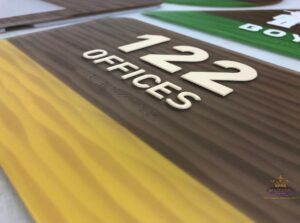
- Room identification – Office and conference room signs must meet mounting height requirements
Including this in your initial budget keeps your property aligned with regulations. Retrofitting an entire property costs roughly three times more than doing it right during initial installation.
Plan for Tenant Signage and Turnover Costs
Tenant changes are part of managing any commercial property, and signage updates come with each transition. Planning ahead helps you avoid repeated unexpected expenses.
As tenants rotate, you’ll likely need to handle:
- Updating directories – Lobby and floor directories need current tenant names
- Replacing tenant panels – Suite identification changes with each new occupant
- Adjusting wayfinding signage – Large properties may need directional updates
Building this into your budget keeps you prepared. For high-turnover retail centers around Costa Mesa or Anaheim, set aside an annual reserve of $2,000–$5,000, depending on property size.
Why Choose Majestic Sign Studio for Your Commercial Property Signage Budget
When planning your signage budget for a commercial property in California, partnering with the right sign company can mean the difference between unexpected cost overruns and a seamless, predictable investment that delivers long-term value.
- We are a true full-service signage partner handling consultation, design, permitting, fabrication, and installation entirely in-house, so you never need to coordinate between multiple vendors.
- Our team holds deep expertise in Southern California’s complex permitting landscape, navigating city approvals across Corona, Irvine, Anaheim, Riverside, Santa Ana, and Costa Mesa to prevent costly delays.
- We use premium, sustainable materials, including durable acrylics, aluminum composites, and energy-efficient LED illumination that reduce long-term maintenance and replacement costs.
- Our family-owned business brings over a decade of specialized experience since 2012, with industry veterans who approach every commercial property as a long-term branding investment, not a one-time transaction.
- We deliver ADA-compliant signage built to exact specifications the first time, saving you from expensive retrofits that typically cost three times more than proper initial installation.
Plan a Smart Commercial Property Signage Budget Strategy
A structured signage budget for a commercial property in California is less about controlling cost and more about controlling direction. From initial audits to material selection and installation planning, each stage builds toward a system that supports both property performance and tenant experience.
At Majestic Sign Studio, we approach signage as part of a property’s long-term infrastructure. With years of experience working across Southern California—from Irvine and Anaheim to Riverside and Costa Mesa—we help property managers plan signage systems that are practical, compliant, and built for real-world use.