
Effective Vehicle Wrap Designs

Vehicle Wrap Designs 800x500

Table of Contents

Vehicle wraps are a highly effective method of mobile advertising. According to a recent 3M study, a single intra-city truck can get up to 16 million impressions over the course of a year. However, in order to be fully effective, your design must meet some basic requirements and be eye catching. This post will cover how you can achieve an effective vehicle or fleet wrap design.

The Basics

Think of your fleet wrap design like any other advertisement you may do—you need to state who you are, give an idea of what you do and include a call to action. For example, include your company logo and mission statement (as long as it’s short and sweet) to let viewers know who you are and what you do. For a call to action, include your telephone number and/or website, with some sort of prompting message, such as, “Call today for a free quote”.

Representation, Real Estate & Right Emphasis

Moving into design—you want something that catches attention and is pleasing to the eye, but also does not distract from your main message. To start, think back to your brand and what it represents. What do you want your potential customers to perceive from your company and its image? If you want to present a professional brand, keep your design more conservative. If your brand is something a little more fun, display that in your presentation by using a louder design. Use your company’s standard color palate, and, if it will enhance your design, incorporate some complementary colors as well.

Now think of how much real estate you want to use, while taking your vehicle type into account. You can choose from a full wrap, ¾ wrap, ½ wrap or decal kit. A full wrap includes the sides, rear and hood, whereas the ¾ wrap covers ¾ of the side and rear. A ½ wrap includes side coverage and rear and a decal kit can include a la carte decals and/or window perf.

Whatever design you choose, remember that the goal of it is to draw attention to your important information. Also keep in mind that your ad will be in motion most of the time, so viewers will only have a few seconds to catch your message. As such, your design should provide the right level of emphasis without overshadowing your core message.

Create Your Vehicle Wrap Design

Now, keeping all of that in mind, choose your design. Here some popular ways design is used in fleet wraps:

  1. Bold branding: If you’re primary goal is to raise awareness about your brand, stick to your brand elements. Create a vibrant design that complements your logo and helps it stand out. Stick to your company color palate and only use other colors if they contrast properly and add emphasis to your logo. Also ensure the colors you use go well with the color of your vehicle.
  2. Exemplify your capabilities: If you’re in a business that offers a specific skill, display what you can do. For example, if you work at an interior design company, show off your design capabilities with an elegant design. This will draw attention and help add credibility right off the bat. You can also go a step further and display a short list of your company’s core capabilities, products or services.
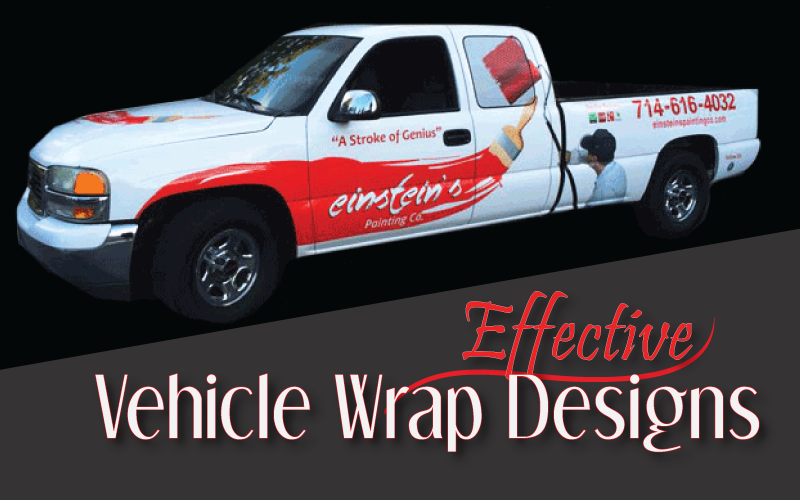
  3. Illustrations: Using design elements like illustrations and pictures help draw attention and create impact. When done properly, this can be very effective because you can quickly explain who you are and what you do in those few moments when someone glances at your vehicle. If you’re in the food business, display photos or illustrations of your most appetizing dishes. Or, if you’re a pet grooming business, show a fun picture of a dog in a bath. People respond to pictures more than words, so if you can illustrate who you are, do so.

At Majestic Sign Studio, we provide comprehensive vehicle wrap designs, from an initial brainstorm to installation. If you’re ready to increase brand awareness in a cost effective way, contact us with your questions or to receive a quote on a vehicle fleet wrap today!
https://www.majesticsignstudio.com/products_services/vehicle_wraps_graphics.html


Picture of Gordy Wolfe

Gordy Wolfe

President & Owner of Majestic Sign Studio, is a visionary leader based in Corona, California, driving innovation in the signage industry. With a deep passion for transforming brand ideas into tangible, high-impact visual solutions, Gordy has steered Majestic Sign Studio to a reputation for excellence—offering custom indoor and outdoor signs, ADA signage, wall murals, vehicle wraps, and more.

Leading the company since 2012, Gordy brings over 30 years of industry experience—including nearly 21 years as a National Account Manager at AkzoNobel (Glidden Professional) — AkzoNobel is a Fortune 500 global company. His leadership blends deep expertise, creative vision, and hands-on involvement to deliver innovative, high-quality signage solutions. Under his guidance, Majestic Sign Studio combines creative design, precise fabrication, and expert installation to help businesses across the United States achieve standout branding. Every project reflects both aesthetic appeal and strategic purpose—making signage not just seen, but remembered.

Tell Us About Your Sign Project
What type of signage are you looking for?
Allowed file size up to 50MB: jpg, pdf, eps, ai, png

Recent Posts

Commercial Sign Company Guide | Majestic Sign Studio

What Makes a Great Commercial Sign Company in Southern California?

A great commercial sign company does more than produce signs—it manages the entire process from design and permitting to fabrication and installation. Choosing the right partner ensures your signage is code-compliant, visually impactful, and built to last. This guide explains what to look for when selecting a commercial signage company for your business or property.

Read More
Tell Us About Your Sign Project
What type of signage are you looking for?
Allowed file size up to 50MB: jpg, pdf, eps, ai, png

Recent Posts

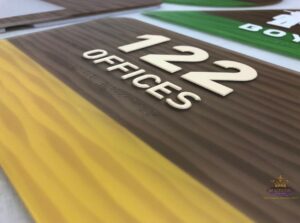
Room 122 offices sign with raised numbers, tactile lettering, and braille

ADA Signage Requirements for Commercial Buildings in California

For ADA signage in commercial buildings in California, one must comply with both the Americans with Disabilities Act (ADA) and the California Building Codes (CBC). For facility managers and business owners, the specific requirements for tactile signs, braille, and placement are not optional. Non-compliance leads to failed inspections, accessibility lawsuits, and costly retrofits. The rules apply to any permanent room or space: restrooms, stairwells, exits, conference rooms, and accessible parking.

Read More
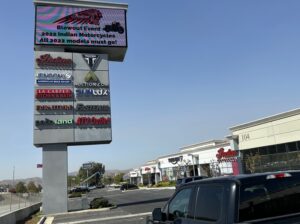
Multi-tenant pylon sign with tenant panels and digital message display at a Southern California retail property

Essential Sign Types Every Multi-Tenant Building Needs in Southern California

Managing a multi-tenant building in Southern California comes with a daily reality: people get lost. Delivery drivers circle parking lots. Clients walk into the wrong suites. Tenants get frustrated calls from visitors who can’t find the elevator bank.

That confusion isn’t just annoying; it costs you time, tenant satisfaction, and ultimately, lease renewals.

Your multi-tenant building signage in Southern California is either solving those problems or making them worse. When signage is unclear, outdated, or incomplete, you pay for it with disrupted operations and tenant turnover.

Read More
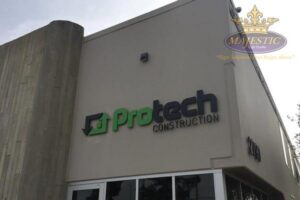
ProTech Construction dimensional building sign installed on a commercial property by Majestic Sign Studio

Complete Signage Planning Guide for Commercial Property Managers in Southern California

Commercial property signage Southern California projects usually start with a simple challenge: your property may be active, but it doesn’t always feel easy to navigate or visually consistent. Tenants might be visible, but visitors still hesitate at entry points or miss key locations.

Across Irvine office districts, Anaheim retail corridors, Riverside business parks, Santa Ana commercial streets, Costa Mesa centers, and Corona developments, signage often becomes part of how smoothly your property actually operates day to day.

In most multi-tenant properties we evaluate, confusion typically happens within the first 30–60 seconds of arrival—usually at entry points, parking transitions, or tenant identification zones. This is where structured signage planning makes the biggest operational difference.

Read More