

Commercial property signage Southern California projects usually start with a simple challenge: your property may be active, but it doesn’t always feel easy to navigate or visually consistent. Tenants might be visible, but visitors still hesitate at entry points or miss key locations.
Across Irvine office districts, Anaheim retail corridors, Riverside business parks, Santa Ana commercial streets, Costa Mesa centers, and Corona developments, signage often becomes part of how smoothly your property actually operates day to day.
In most multi-tenant properties we evaluate, confusion typically happens within the first 30–60 seconds of arrival—usually at entry points, parking transitions, or tenant identification zones. This is where structured signage planning makes the biggest operational difference.
This guide walks you through how commercial property signage in Southern California is typically structured so your building stays clear, organized, and easy to navigate.
Commercial Property Signage Planning at a Glance
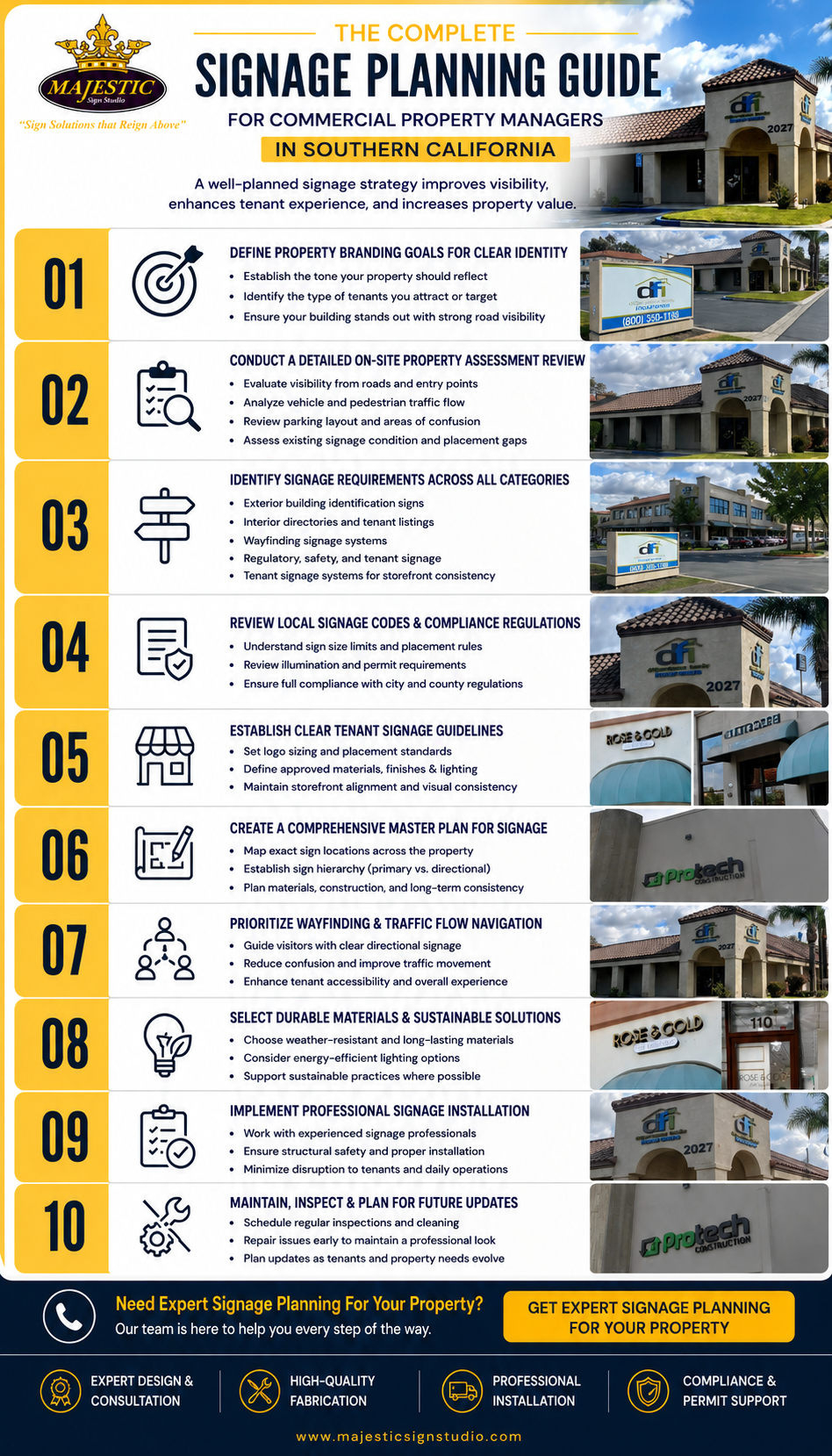
Before reviewing each step in detail, use the infographic below as a quick visual overview of the foundational stages involved in planning commercial property signage. It highlights the importance of property branding, site assessments, signage requirements, local compliance, tenant standards, master planning, and wayfinding.
Get Expert Signage Planning For Your Property
1. Define Property Branding Goals for Clear Identity
Every signage system starts with understanding how your property should be recognized. Without that clarity, signage tends to feel inconsistent or disconnected from the building itself.
Before any design decisions, you need to think about how your property should appear to tenants, visitors, and people passing by. A retail center in Orange County will naturally communicate differently from an office property in Riverside.
At this stage, you typically define:
- The tone your property branding signage should reflect
- The type of tenants your property attracts or targets
- How your building should be recognized from the main road visibility
This step helps ensure your commercial building signage supports long-term positioning instead of just filling empty wall or façade space.
2. Conduct a Detailed On-Site Property Assessment Review
Before anything is designed or installed, your property needs to be evaluated based on how people actually move through it. Site conditions often reveal issues that plans alone don’t show.
You’re essentially looking at how visitors experience your property in real conditions, especially in high-traffic areas like Irvine business zones or Anaheim retail corridors.
This includes:
- Visibility from surrounding roads and entry points
- Vehicle and pedestrian traffic flow patterns
- Parking layout and areas where confusion happens
- Existing signage condition and placement gaps
In many commercial signage properties in Orange County, this step often reveals navigation issues that have been affecting daily traffic flow without being noticed.
3. Identify Signage Requirements Across All Property Categories
Most properties require more than just a main building sign. You usually need multiple signage types working together as a system to support navigation and clarity.
This step is about breaking everything down so you don’t miss important functional signage areas across your property. Typical categories include:
- Exterior building identification signage
- Interior directories and tenant listings
- Wayfinding signage systems
- Regulatory and safety signage
- Tenant signage systems for storefront consistency
When these categories are planned properly, your property feels more structured and easier to navigate.
4. Review Local Signage Codes and Compliance Regulations Carefully
Every city in Southern California has its own signage rules, and these directly affect what you can and cannot install. If you skip this early step, you risk delays later.
Whether your property is in Anaheim, Santa Ana, Riverside, or surrounding commercial zones, requirements can vary in detail. You typically need to account for:
- Sign size limits
- Illumination rules
- Placement restrictions
- Permit requirements
This ensures your building signage planning stays aligned with local regulations from the start. We regularly see projects delayed because compliance was addressed after design, rather than integrated from the beginning. Early code alignment prevents redesign costs and approval delays,
5. Establish Clear Tenant Signage Guidelines for Consistency
If your property has multiple tenants, consistency becomes a major factor in how professional the building looks overall. Without guidelines, storefront signs can become visually uneven.
This step helps set expectations so that tenant signage still supports the overall property identity. Common guidelines include:
- Logo sizing and placement rules
- Approved materials and finishes
- Lighting allowances (if permitted)
- Storefront alignment standards
Without clear tenant criteria, properties often end up with a mix of sign types, colors, and lighting styles that weaken overall brand perception and make navigation harder for visitors.
6. Create a Comprehensive Master Plan for Property Signage
A signage master plan is what connects all individual signs into one structured system. Without it, signage tends to feel placed randomly over time.
This plan helps you see how everything fits together before anything is installed. It usually includes:
- Exact sign locations across the property
- Sign hierarchy (primary vs directional signage)
- Material and construction planning
- Overall visual consistency system
For larger commercial signage, Orange County signage company projects, this becomes the reference point for every future decision.
7. Prioritize Wayfinding Systems and Traffic Flow Navigation
Good signage doesn’t just label spaces; it guides movement. If people hesitate or stop to figure out where to go, the system isn’t working as intended.
You want your property to feel intuitive from entry to exit. This includes:
- Entry to lobby direction flow
- Parking to building access routes
- Tenant directory placement logic
- Outdoor directional signage for vehicles
In busy areas like Costa Mesa retail properties or Irvine office developments, clear navigation directly affects how smoothly the property functions.
8. Choose Durable Materials for Long-Term Outdoor Performance
Signage materials matter more than they appear at first. Exposure to sun, weather, and time affects how your property looks long-term.
You want materials that hold up well without constant maintenance or fading. Key considerations include:
- Long-term durability under local weather
- Ease of maintenance over time
- Environmental exposure conditions
- Finish consistency as signage ages
Southern California sun exposure is one of the biggest factors affecting signage lifespan. Lower-quality materials often fade unevenly within a few years, creating a patchwork appearance across properties.
9. Align Signage Design with Property Branding Standards
Your signage should feel like part of one unified system, not separate elements added at different times. This consistency is what reinforces recognition.
Everything needs to follow a shared visual direction across the property. This includes:
- Typography consistency
- Color application standards
- Lighting style alignment
- Design hierarchy across all signage types
Consistency across these elements is what allows visitors to intuitively understand your property without consciously thinking about navigation.
10. Plan Budget Allocation and Phased Implementation Strategy
Most properties don’t install everything at once. A phased approach helps prioritize essential signage first while planning future expansion.
This allows you to manage improvements in structured stages. Typical phases include:
- Priority signage (safety and navigation)
- Core building identity signage
- Tenant signage rollout phases
This approach is commonly used in evolving Riverside commercial signs projects and large multi-tenant properties.
DFI Project Shows the Value of Unified Property Signage Planning
The diGerolamo Family Insurance (DFI) project is a strong example of how commercial property signage in Southern California works best when both the monument sign and building signage are planned as one system. By aligning the street-facing sign with the building-mounted identification, the property presents a clearer visual identity while making the business easier to locate from the road and upon arrival.
This project also connects directly to the blog’s focus on site assessment, visibility planning, and cohesive signage strategy for commercial properties. As John DiGerolamo shared, “The owner Gordy, came out himself and measured everything. He provided fast, competitive quotes & options for both our street and building signs. Gordy is Personable & Professional and his work is Top Quality and Guaranteed! Thanks Gordy!!!”
Your Trusted Partner for Commercial Property Signage Solutions
Majestic Sign Studio is a premier, full-service signage and graphics partner that transforms your brand vision into a high-impact visual reality. From navigating complex city permits to precision fabrication and expert installation, we provide end-to-end solutions that take the stress out of property management and business branding.
By combining industry-leading technology with a personal, family-owned touch, we deliver durable, compliant, and visually stunning signage that keeps your business top-of-mind across Southern California.
Start Your Southern California Signage Project Today
Ready to Plan Your Property Signage?
Whether you are evaluating critical updates or launching a brand-new development, our team is ready to structure a comprehensive commercial building signage strategy from the ground up. We specialize in transforming complex property needs into clear, navigable systems that enhance your building’s professional identity.
Reach out to Majestic Sign Studio today to schedule a professional consultation and begin mapping out a custom signage plan. We are dedicated to creating solutions that perfectly align with your property goals, tenant requirements, and long-term vision in Southern California.
Must Read Articles:
- Interior and Exterior Signage for Commercial Developments: A Complete Guide
- ADA Signage Placement Guide for Offices, Medical Buildings & Retail Centers